
The Great Illusion of the Day-Night Divide
We like to think of our lives as neatly partitioned. We have our 'productive' morning selves, fueled by the steam of a caffeinated mug, and our 'social' evening selves, unwinding with the complex notes of a barrel-aged stout or a crisp pilsner. But if you look closely at the modern craft beer enthusiast, you’ll find someone who is almost certainly just as obsessed with their morning bean as they are with their evening brew. The truth is, the morning coffee ritual isn't just a way to wake up; it is a mirror image of the craft beer movement, driven by the same pursuit of excellence, the same obsession with process, and the same rejection of the mediocre.
For decades, both industries were dominated by a 'commodity mindset.' You drank what was available, which usually meant a thin, watery liquid designed for mass consumption and zero offense. But we have moved past the era of 'brown water' in both its hot and cold forms. If you are the type of person who seeks out a specific hop profile in a West Coast IPA, you are fundamentally the same person who demands to know the elevation of your Ethiopian Yirgacheffe beans. To pretend otherwise is to ignore the shared DNA of these two global obsessions.
The Commodity Exodus: Why We Stopped Settling
The rise of craft beer was a direct rebellion against the bland hegemony of international lagers. It was an argument that beer should have character, history, and flavor. The 'Third Wave' of coffee followed an identical trajectory. We didn't just want caffeine; we wanted to taste the soil, the roast, and the intent of the producer. In my view, the shift from Folgers to single-origin pour-overs is the exact spiritual equivalent of moving from Budweiser to a local microbrew.
From Mass-Produced to Hand-Crafted
In both worlds, the 'craft' label is more than just marketing; it’s a commitment to transparency. When you visit a high-end taproom, you expect to see the tanks. When you visit a specialty coffee shop, you expect to see the roaster or at least a barista who knows the farmer’s name. This isn't pretension; it’s accountability. We have collectively decided that the story behind the glass—or the mug—matters just as much as the liquid itself. If you care about the IBU (International Bitterness Units) in your beer, you likely care about the acidity levels in your morning cup, even if you haven't realized it yet.
The Ritual of Technical Obsession
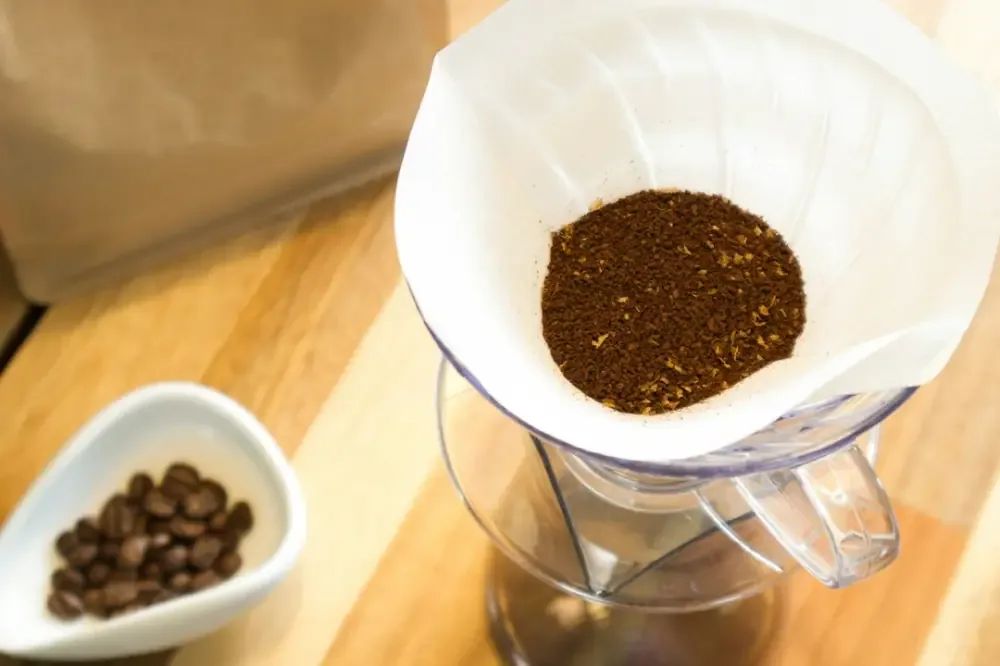
The most striking similarity between the two cultures is the fetishization of the process. A craft beer lover doesn't just drink beer; they analyze the fermentation temperature, the water chemistry, and the dry-hopping schedule. Similarly, the modern coffee ritual has moved far beyond the 'push a button' era. We are now a society of amateur chemists, weighing our grounds to the tenth of a gram and timing our extractions with stopwatches.
This technical obsession is what defines us. We don't want the easy way; we want the right way. This shared methodology creates a bridge between the two worlds. Consider the parallels in the equipment alone:
- Precision Control: The Gooseneck kettle is to the barista what the temperature-controlled conical fermenter is to the brewer.
- Vessel Matters: Just as you wouldn't drink a Belgian Quad out of a plastic solo cup, you wouldn't drink a high-end Geisha coffee out of a Styrofoam container. The glassware/ceramic choice is part of the sensory experience.
- The Science of Water: Both homebrewers and coffee geeks eventually realize that water isn't just water—it’s the solvent that dictates the final flavor profile.
Terroir and the Language of Flavor
We often hear beer critics talk about 'terroir'—the idea that the environment where the ingredients are grown impacts the final taste. This was once a term reserved for wine, but craft beer and coffee have hijacked it, and rightfully so. When you drink a beer brewed with Noble hops from the Hallertau region, you are tasting a specific geography. When you sip a coffee from the volcanic soils of Guatemala, you are doing the same.
The vocabulary we use to describe these drinks has become nearly interchangeable. We look for 'stone fruit notes,' 'floral aromas,' 'chocolatey finishes,' and 'mouthfeel.' If you were to read a professional tasting flight description for a coffee and a beer side-by-side, you might struggle to tell which is which. This isn't a coincidence. It’s because both rituals are centered on the appreciation of organic complexity. We are chasing the same high: the moment when a beverage transcends its ingredients to become an experience.
The Taproom and the Café: Shared Social Sanctuaries
Finally, we must look at the spaces we inhabit. At Festival Cerveceros, we talk a lot about how breweries are the new 'third places'—social hubs that aren't work or home. The specialty coffee shop serves the exact same function during daylight hours. They are both sanctuaries for the curious. They are places where you can sit alone with a book or engage in a deep debate about the merits of wild yeast versus kveik, or natural process versus washed coffee beans.
The culture of the 'brewery crawl' has even found its equivalent in the 'café hop.' We travel to new cities specifically to visit their most renowned roasters, much like we plan vacations around destination breweries. The motivation is identical: a desire to see how a specific community interprets a global craft.
The Verdict: One Obsession, Two Temperatures
To the critics who say we take our drinks too seriously, I say they are missing the point of living. Whether it’s the first pour-over of the morning or the last barrel-aged pour of the night, these rituals provide a necessary anchor in a fast-paced world. They force us to slow down, to notice the details, and to appreciate the labor of the artisans who made the drink possible.
The morning coffee ritual doesn't just mirror our love for craft beer; it completes it. They are two sides of the same coin, two expressions of the same human desire to find beauty in the mundane. If you call yourself a craft beer lover but you're still drinking commodity coffee, it’s time to wake up. Your palate deserves better, and the ritual is waiting for you.